Choosing the food may be the easy part. The harder question is figuring out how everyone is supposed to eat it.
Will the team have 30 minutes between meetings? Can everyone leave their seats? Is there actually room for a buffet once 20 people and their laptops are in the conference room?
When comparing boxed lunch vs buffet catering, the best choice usually has less to do with presentation and more to do with how the workday needs to run. Your meeting agenda, room layout, workforce schedule, dietary needs, and plans for the lunch break can all point you toward one format or the other.
The right choice is the one that makes lunch fit naturally into the day.
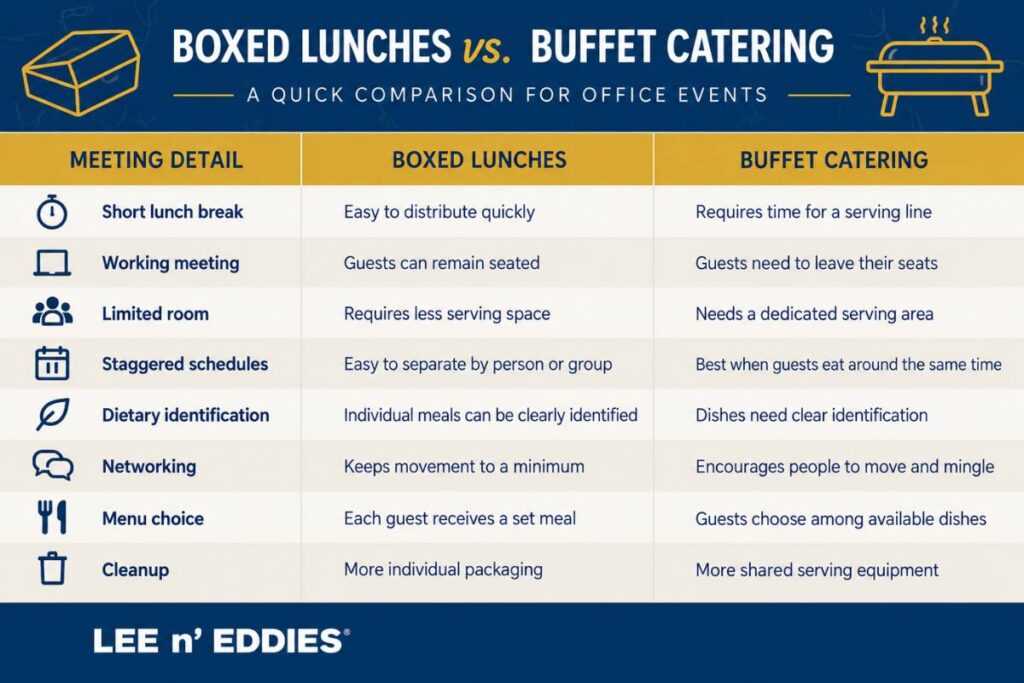
Quick Comparison
Neither approach is automatically better. Good office lunch catering starts with understanding what the people in the room will actually be doing before, during, and after lunch.
Meeting Lunch Timing
Start with the meeting schedule before you start comparing sandwiches and entrées.
A short break leaves very little time for people to form a serving line, choose their food, find a seat, eat, and get back to work. Boxed lunch catering can make that transition faster because meals are already portioned and ready to distribute.
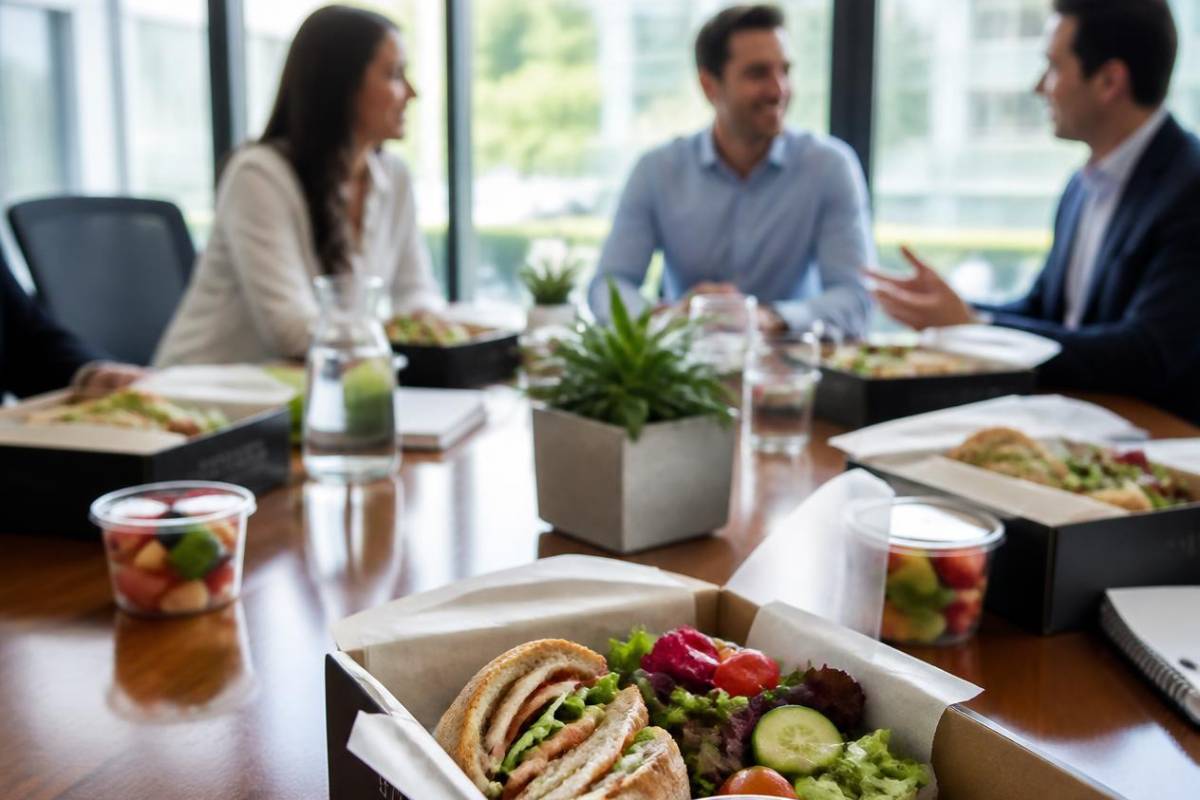
This can be especially useful during training sessions, presentations, board meetings, or other events where lunch needs to fit between scheduled activities. If people will continue working or listening while they eat, keeping movement to a minimum can also help the meeting stay on track.
An office buffet catering setup works better when lunch has more breathing room. Guests need time to get up, move through the line, return to their seats, and settle back in.
That extra movement is not necessarily a drawback. During an employee appreciation lunch, company gathering, or longer training day, a less structured meal period may be exactly what you want.
Room And Setup
The amount of available space can quickly narrow the choices.
A conference room may comfortably seat 20 people but still have nowhere practical to place a buffet. Food tables, warming equipment, beverages, serving utensils, and the people using them all need room.
Boxed lunches require much less serving space. Meals can be placed at a pickup table, distributed as guests arrive, or handed out when the lunch break begins.
Buffets work best when you can create a clear serving area away from crowded meeting tables. Break rooms, cafeterias, training rooms, and larger common areas generally give people more room to move without disrupting the rest of the event.
Think about traffic flow as well as square footage. If guests have to squeeze behind occupied chairs every time they visit the buffet, the room may not be a good fit even if there is technically enough space for the food.
Staggered Lunch Schedules
Not every workplace can send the entire staff to lunch at the same time.
Customer service teams, warehouses, healthcare offices, manufacturing facilities, retail operations, and other workplaces may need to keep part of the team working while another group eats. Traditional offices can run into the same issue when departments have different meetings or deadlines.
Individually packaged meals can simplify staggered lunches because each meal is already separated. Employees can pick up their food when their break begins without waiting for the entire office to be available.
Buffets tend to work more smoothly when most guests will eat within the same general window. If your office will have several lunch periods, consider how long the food needs to remain available and how the serving area will function as groups come and go.
Before placing the catering order, know more than the headcount. Know when that headcount plans to eat.
Dietary Meal Planning
Dietary needs can influence the serving format too.
With boxed lunches, specific meals can be kept separate and clearly identified for the intended guest. That can make distribution easier when employees have different dietary requirements.
A buffet requires more attention to how dishes are identified. Guests need to understand their choices before adding food to their plates, and the overall menu should be planned with the needs of the group in mind.
Share dietary requirements with your caterer early in the planning process. That gives you more time to determine whether individual meals, a buffet, or another arrangement makes the most sense for the group.
Cleanup And Reset
Cleanup deserves a little attention before the food arrives.
Boxed meals make distribution simple, but a large office lunch can produce a noticeable amount of individual packaging. Make sure there are convenient places for employees to dispose of boxes, containers, napkins, cups, and other items when they finish eating.
A buffet concentrates more of the food into shared serving containers, but there may be platters, utensils, warming equipment, beverage supplies, and other items that need to be cleared.
This matters most when the room has another purpose immediately after lunch. If a training session needs to restart at 1:00, you do not want to discover at 12:55 that nobody thought about how the room would be reset.
The best meeting lunch catering plan accounts for what happens after everyone finishes eating, not just how the food gets onto the table.
Working Lunches
Consider what you want people to do while they eat.
For a working lunch, less movement is often helpful. Employees can stay at the conference table with their laptops, notes, and materials while boxed meals are distributed with minimal interruption.
A buffet creates a natural pause in the meeting. People get up, move through the room, make their selections, and often talk with coworkers they were not sitting beside.
That can be useful when lunch is part of an employee celebration, client event, team-building day, or larger company gathering. The serving format becomes part of the flow of the event.
A buffet is not simply a way to give guests more choices, and a boxed lunch is not simply the faster option. Each creates a different kind of lunch break.
Choosing Your Format
If you are stuck between boxed lunch vs buffet catering, picture the lunch period from beginning to end.
Imagine where employees are sitting when lunch starts. Think about whether they can leave those seats, how much time they have, where the food will go, whether everyone is eating together, and what needs to happen when lunch ends.
For a short working meeting in a tight conference room, boxed lunches may make the day easier.
For a company lunch with a larger room, a longer break, and time for coworkers to socialize, a buffet may be the stronger fit.
Two events can have the exact same guest count and still need completely different setups. That is why the agenda and room are often more useful decision tools than the number of people you are feeding.
It also helps to discuss the meeting itself when requesting office lunch catering, not just the headcount. Knowing the schedule, room setup, dietary needs, and how employees will take their breaks gives the Lee n’ Eddies team a better picture of whether boxed lunches, individually packaged meals, or a buffet makes more sense.
Keep Lunch Simple
Office catering should make the workday easier, not create another project for the person organizing it.
Lee n’ Eddies offers boxed lunches, individually packaged options, buffets, and other Corporate Catering choices for meetings and company events throughout Chicagoland. The best starting point is your guest count, schedule, space, and plans for the day.
Once those pieces are clear, choosing the lunch format becomes much easier.
Request a Quote and we’ll help you find a catering setup that fits your team and your event.
Office Lunch Catering Questions
What Information Should I Give My Caterer?
When requesting meeting lunch catering, provide the expected guest count, event date and location, preferred delivery or serving time, length of the lunch break, dietary needs, and basic room setup. It is also helpful to explain whether everyone will eat together or in shifts so your caterer has a clearer picture of how the meal needs to work.